English at Our School
At Bursley Academy, our English curriculum is carefully sequenced, ambitious, and fully aligned with the National Curriculum. English underpins all areas of learning, and we are committed to ensuring that every pupil develops the knowledge, skills, and confidence required to become a fluent reader, strong speaker, and effective writer.
Our Reading and Writing curriculums are designed to work together, ensuring a coherent and progressive approach to English. They provide rich, purposeful learning experiences that enable pupils to communicate effectively, access learning across the curriculum, and engage meaningfully with the world around them.
Curriculum Vision
We believe that reading and writing are lifelong skills that open doors to learning, creativity, and opportunity. Our English curriculum places equal importance on accuracy, enjoyment, confidence, and creativity. Pupils are taught not only how to read and write, but why these skills matter, with clear purposes, audiences, and real-world contexts underpinning learning.
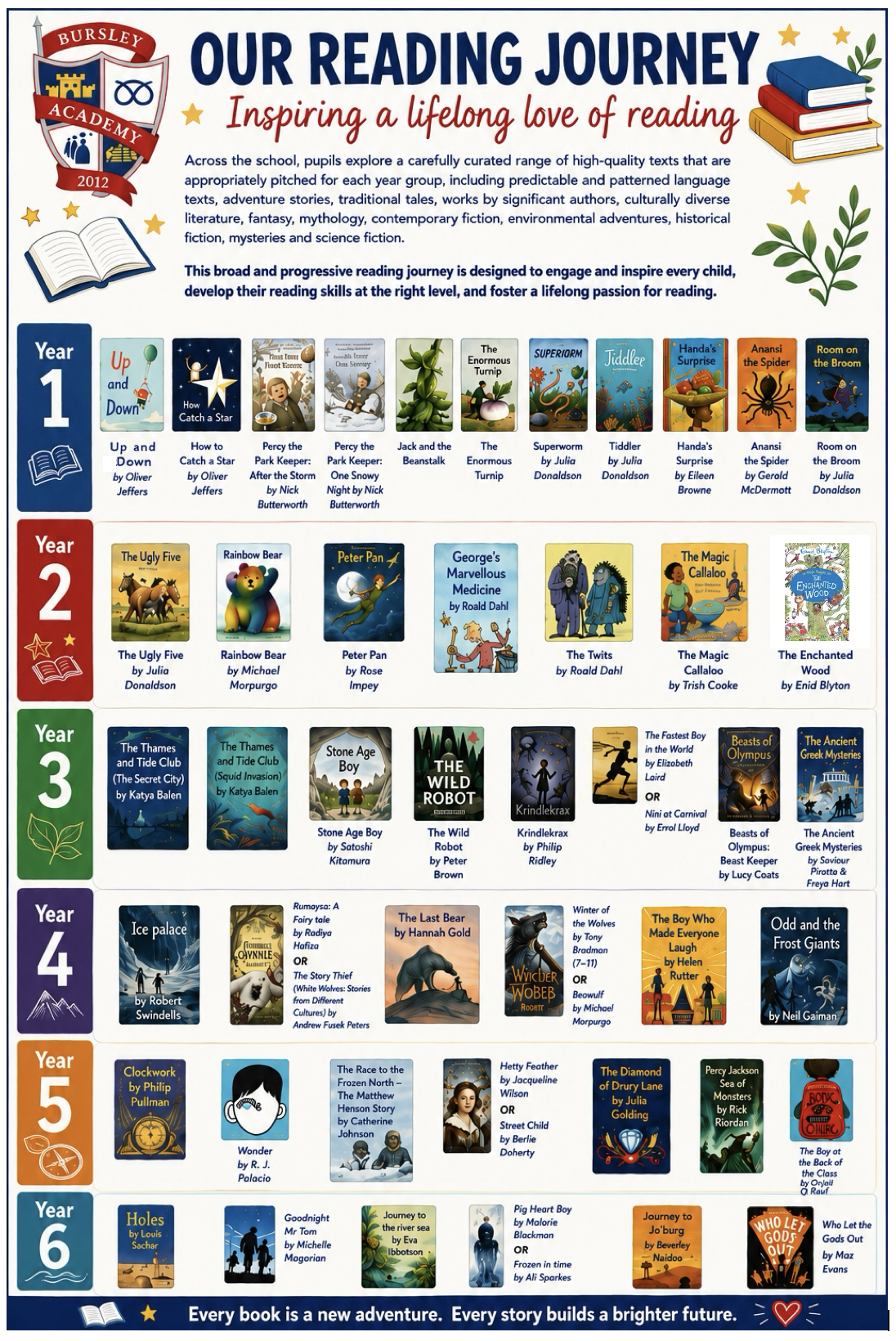
High-quality and diverse texts sit at the heart of the curriculum. These texts model language, structure, and style, inspire pupils’ writing, and aim to foster a lifelong appreciation of reading.
Reading Curriculum Intent
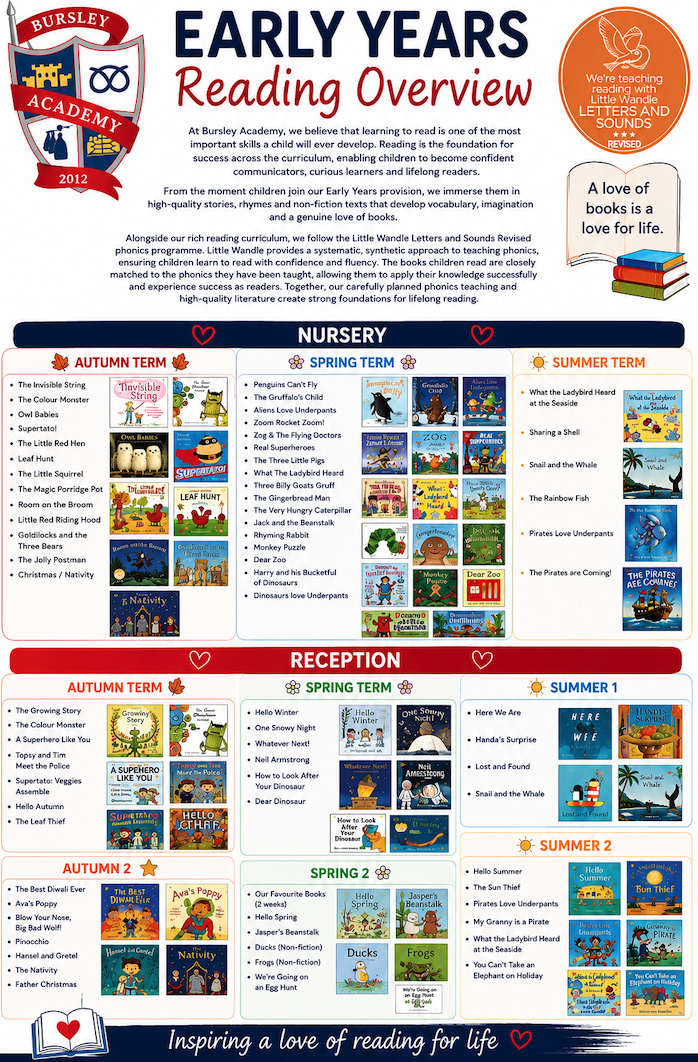
Reading lies at the heart of our curriculum. We believe that developing a love of reading is fundamental to academic success, personal development, and future opportunities. Pupils engage with a wide range of high-quality, current, and diverse texts that promote curiosity, enjoyment, and critical thinking across a range of genres and subject areas.
Our reading programme begins with Little Wandle, a single systematic synthetic phonics programme that provides a consistent and rigorous foundation in early reading. This approach ensures pupils develop secure phonological knowledge, accurate decoding skills, and growing confidence as readers. Early identification and targeted intervention ensure that pupils are supported to keep up rather than catch up.
As pupils progress, reading instruction increases in depth and challenge, developing:
-
Fluency and accuracy
-
Comprehension and understanding
-
Inference, prediction, and evaluation
-
Vocabulary acquisition
-
Understanding of authorial intent
Reading aloud and being read to are prioritised and embedded through daily whole-class reading, reading with the class teacher, and independent reading. These approaches ensure pupils experience reading in a range of meaningful and enjoyable ways.
Key reading skills are taught explicitly through the following focus areas:
-
Letters and phonics
-
Words
-
Text
-
Reading skills
-
Vocabulary
-
Understanding reading
-
Talking about reading
Together, these elements build confident, fluent, and thoughtful readers.
Writing Curriculum Intent
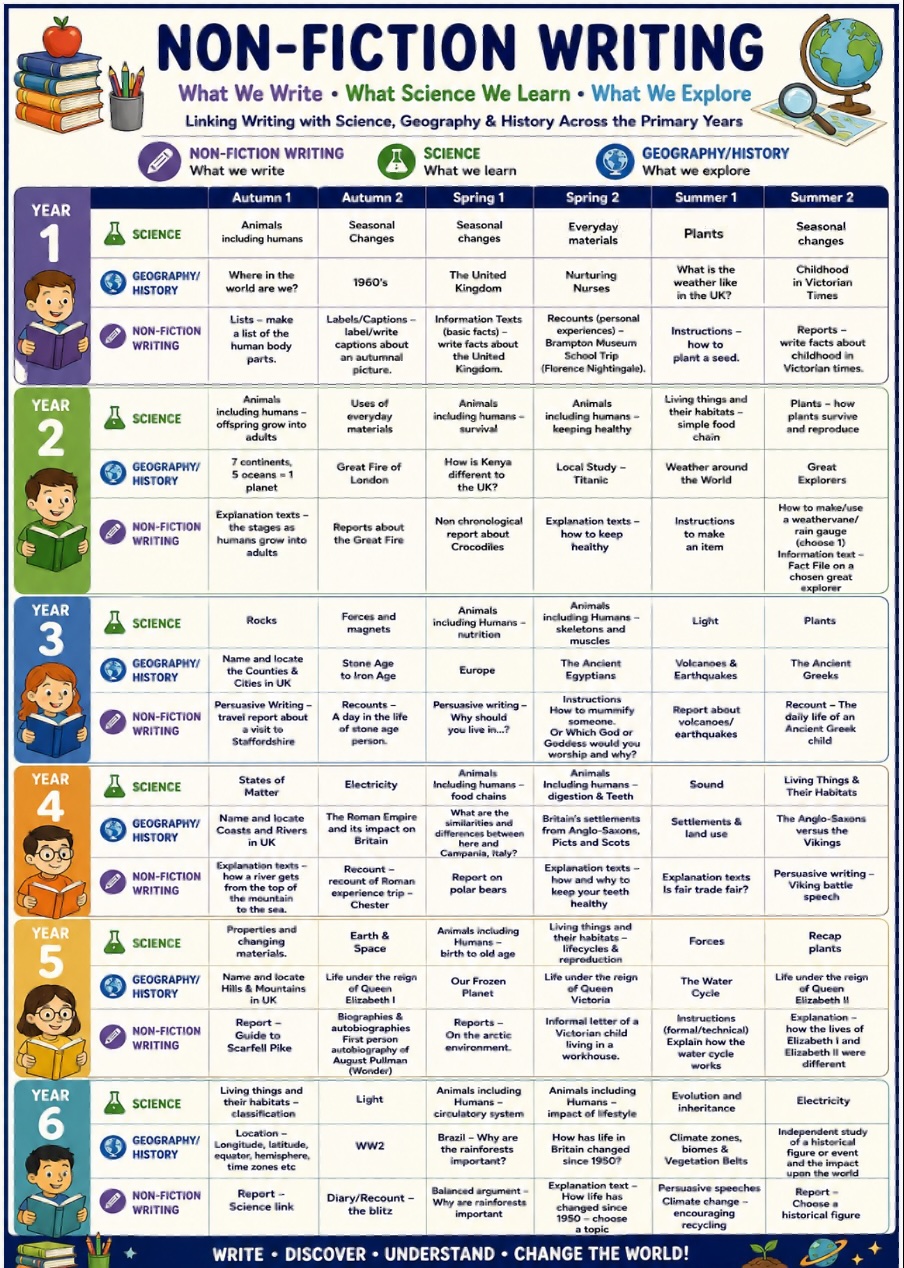
Writing at Bursley Academy is purposeful, creative, and meaningful. Pupils are taught the importance of writing in everyday life and are given clear reasons for why they are writing and who they are writing for. Writing is inspired by high-quality texts and spans a range of genres, with non-fiction writing closely linked to the texts or wider curriculum to ensure relevance and real-world application.
Our writing is structured across four key purposes:
-
Writing to entertain
-
Writing to inform
-
Writing to persuade
-
Writing to discuss
Within these genres, pupils develop the essential skills and knowledge needed to write effectively. These are defined by:
-
How to write
-
What to write
-
How to make writing make sense
Foundational skills, including sentence structure, grammar, punctuation, spelling, and handwriting, are taught to ensure accuracy and fluency. Building on these foundations, pupils develop creativity, confidence, and stamina, experimenting with language and structure to engage the reader.
Writing is taught through a carefully sequenced and progressive approach, with pupils supported to plan, draft, revise, and refine their work. Appropriate challenge and scaffolding ensure high expectations for all learners, fostering resilience, pride, and a strong sense of achievement.
Oracy
Oracy is a central component of our English curriculum. Pupils are encouraged to discuss ideas, articulate their thinking, and rehearse language orally before writing. This strengthens understanding, supports vocabulary development, and enhances the quality and clarity of written outcomes, ensuring pupils are confident communicators as well as effective readers and writers.
Ultimately, our English curriculum aims to inspire resilient, articulate, and curious readers and writers, equipping them with the confidence and skills to succeed both in school and in life.
Downloads
English Crucial Knowledge
